
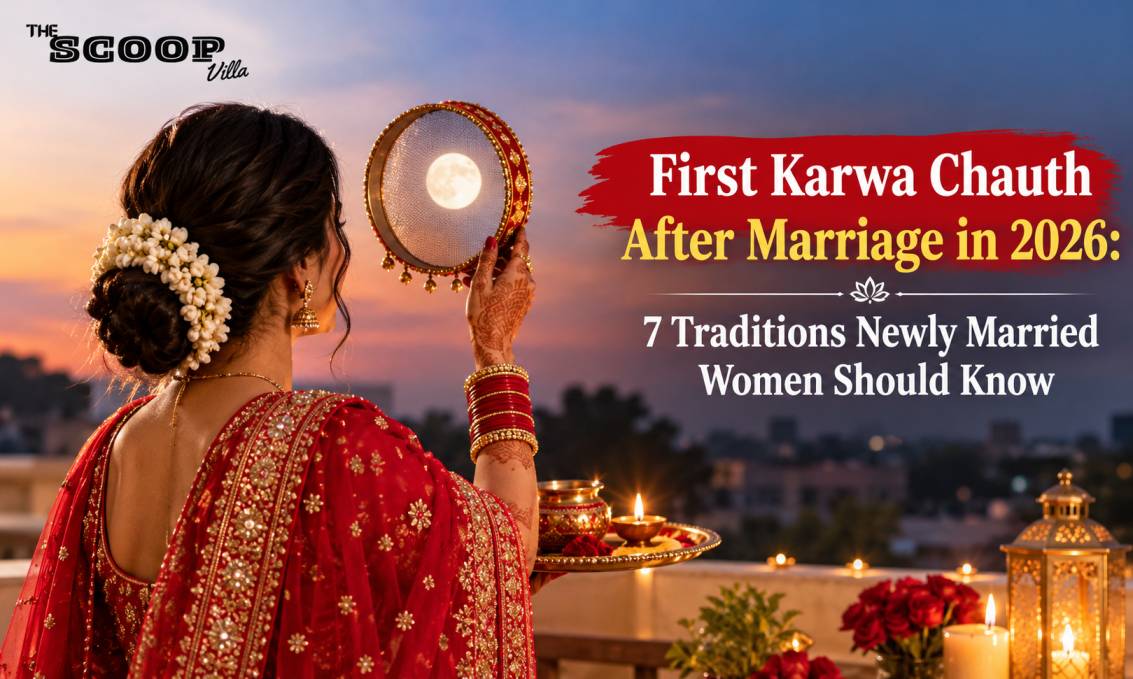
Your first Karwa Chauth after marriage can be a very emotional day, filled with family customs, prayers for your spouse’s health, and the excitement of new traditions. Many married Hindu women fast for the festival, primarily in North India, and pray for the health and longevity of their husbands, fasting from sunrise to moonrise.
The fourth day of the waning moon in Hindu month of Kartik is called Karva Chauth. These are the seven customs that are most likely to be faced by newly married women.
1. Sargi: The Pre-Dawn Meal
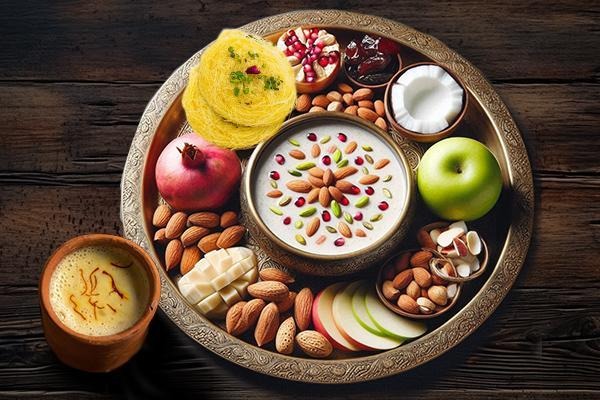
Sargi, a nutritious breakfast, is prepared or set up by the mother-in-law, and served to the daughter-in-law before dawn. It typically contains dried fruits, sweets, coconut, and sometimes, gifts like clothes or jewellery.
Sargi is important because the fast is traditionally nirjala, without food or water, from sunrise until moonrise. A balanced sargi can make the day more comfortable for you, but should be consumed before dawn.
2. Morning Bath and Traditional Attire
Following the sargi, many women wash and put on festive traditional attire, which is frequently red, maroon, pink or other auspicious colours. Another popular tradition is to apply mehndi (henna) to the hands and feet, which is believed to bring good luck and happiness to the bride.
There is no dress code that must be followed. Wear comfortable clothes and footwear, particularly for the evening puja or if you are going to a family function.
3. The Karwa and Puja Thali
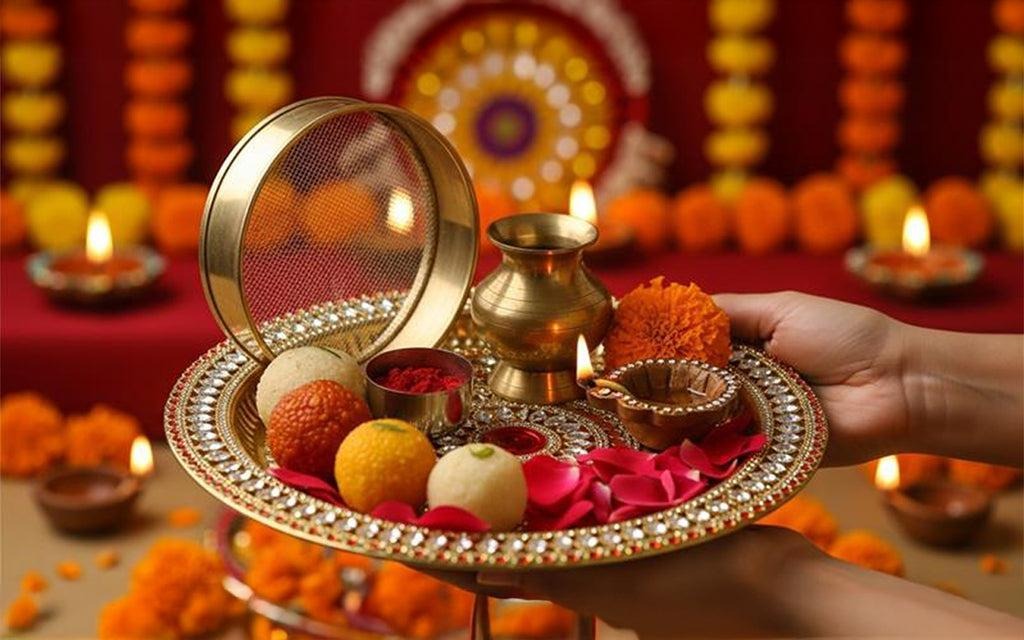
The meaning of Karva is earthen pot and the meaning of Chauth is fourth day. The evening ritual includes a decorated karwa, which may be filled with water, and a puja thali, which includes a diya, roli, unbroken rice (akshat), flowers, incense, fruit, and sweets.
In addition, families can have a sieve or chalni, a small cloth, and the vrat katha book or a picture of the deity. As the use of these things differs from region to region, inquire from your mother-in-law or a senior family member what they use in your household.
4. Evening Puja and Vrat Katha
Women usually hold the puja of Karwa Chauth before the moonrise in the auspicious evening time after the sunset. They hear or recite the vrat katha (traditional story that goes with the fast) and pray for marital health.
The most common legend linked to Karwa Chauth is of Queen Veeravati who is believed to have brought her husband back to life through her devotion. Specific details of the story and ritual may vary from community to community; follow the family’s instructions.
5. Moon Sighting and Arghya
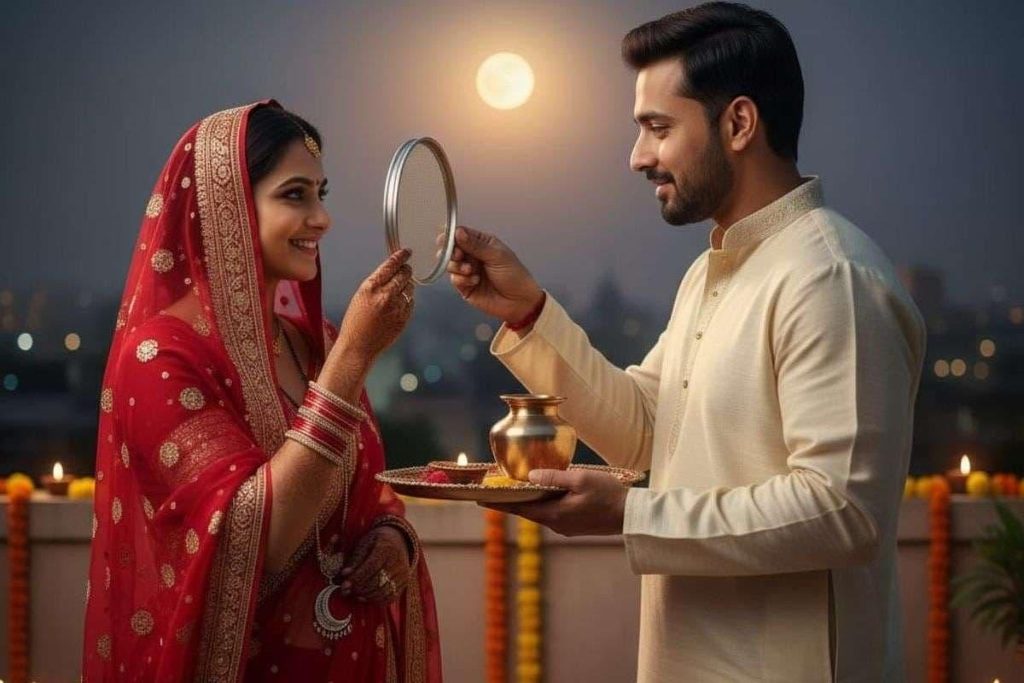
The fast is normally ended only after the sighting of the moon. Women bring arghya (water) to the moon and pray to Chandra (Moon God). In many homes the woman looks at the moon through a sieve and then at her husband’s face through the sieve before breaking the fast.
6. Breaking the Fast Together
The husband will then offer his wife water and the first morsel of food after the moon ritual, ending the fast. Many then have a special meal made for them.
When you are fasting for the first time, it’s best to keep the meal after the fast light; water, coconut water, fruit or a light meal prepared at home may be easier on the body than a heavy meal with lots of oil. Anyone who is pregnant, unwell, has diabetes, or has a medical condition should consult a doctor before observing a waterless fast.
7. Gifts, Blessings, and Family Bonding
The first Karwa Chauth is also a time of blessings and gifts. Sargi, clothes, jewellery or sweets can be given by the mother-in-law, a gift can be given by the husband and relatives can bless the newly married couple. These exchanges are not mandatory, and are based on the family’s preference.
Most importantly, keep in mind that Karwa Chauth is a devotional and cultural festival, and not a test of love or endurance. If you decide to fast, do it safely; if your family allows alternatives, like a partial fast, that can be a meaningful way to fast as well.
Conclusion
Karwa Chauth after marriage isn’t just a date on the festive calendar; it’s a memorable occasion filled with ancient traditions, togetherness, and the excitement of being a newlywed. Each ritual has its own special flavor to the event, from getting up early to get sargi before sunrise to waiting for the moon. These are some of the traditions that can make newly married women’s day less confusing and more enjoyable.
The festival is colourful with gifts, mehndi, traditional dresses and family blessings but the essence of the festival is love, companionship and sharing. Different households may have different customs; couples can celebrate in a way that is meaningful to them.
Above all, fasting should never be a trial of devotion or endurance. For those who observe a traditional fast, or those who opt for an alternative, let your first Karwa Chauth be a celebration of love, understanding and memories that will last long after the moon has risen.

Swati Singh is a Culture & Lifestyle Writer with a Bachelor of Arts in English from the University of Delhi. She covers trending stories and fresh perspectives on fashion, beauty, wellness, relationships, cultural traditions, and modern living. With a passion for storytelling, she explores emerging lifestyle trends, seasonal celebrations, popular culture, and everyday topics that matter to readers. Her goal is to deliver engaging, informative, and relatable content that helps readers discover new ideas, stay updated on changing trends, and find inspiration in everyday life.