
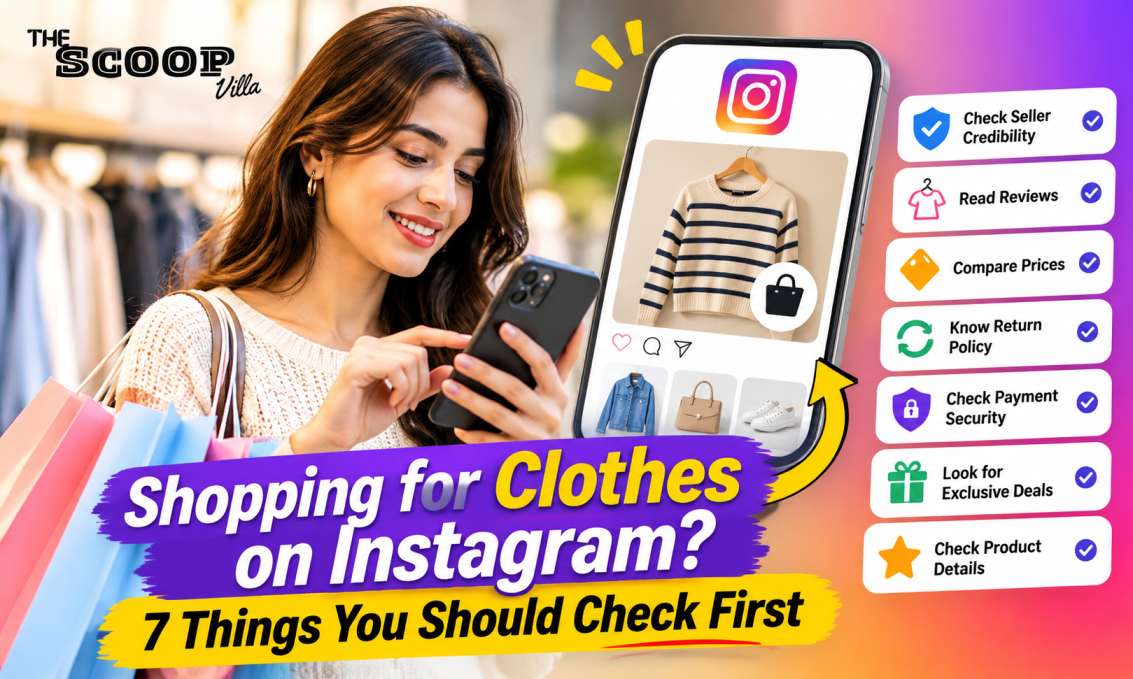
Small Instagram boutiques can offer kurtas, dresses and co-ord sets that feel more distinctive, sometimes at lower prices than big shopping apps. Many operate through posts and direct messages alone. There may be no website to inspect or shop to visit.
That makes buying clothes from Instagram a mixed bet: genuine small sellers share the same feed as pages built to take your money. Spend a few minutes on these seven checks before you pay.
7 Things to Check Before Buying Clothes From Instagram Stores
1. How old the account is, and whether it changed names
Open the profile, tap the three dots and choose “About this account“. The panel can show when the account joined, the country it is based in according to its activity, and, for many accounts, previous usernames.
Be wary of a page created only a few months ago that already claims a huge following. Several username changes deserve a closer look, too. Instagram does not display this information for every account, so a missing panel proves nothing by itself.
2. Comments, tagged posts and real buyers
Read the comments and watch how the seller answers questions about sizes, delivery and stock. Replies that dodge basic questions tell you little about the shop.
Comments switched off on product posts are a reason to pause. Open the tagged-posts tab and look for customers wearing the clothes, rather than more promotional pictures. Check different posts, too. A page with followers in the lakhs but only a handful of likes and vague, repetitive comments may have bought its audience.
3. Whose photos those are
Use Google Lens to search the product picture. When the same model and image are found in multiple different unrelated stores, the seller might be a reseller, or the page might be fake. That doesn’t answer the question, but it is a call for proof.
Authentic sellers tend to post their own photos, fabric close-ups, short videos and try-on photos. When ordering, request an unedited photo or video of the specific item, preferably with a detail you specify. There’s a lot to be learned from a simple request.
4. Size chart and fabric details
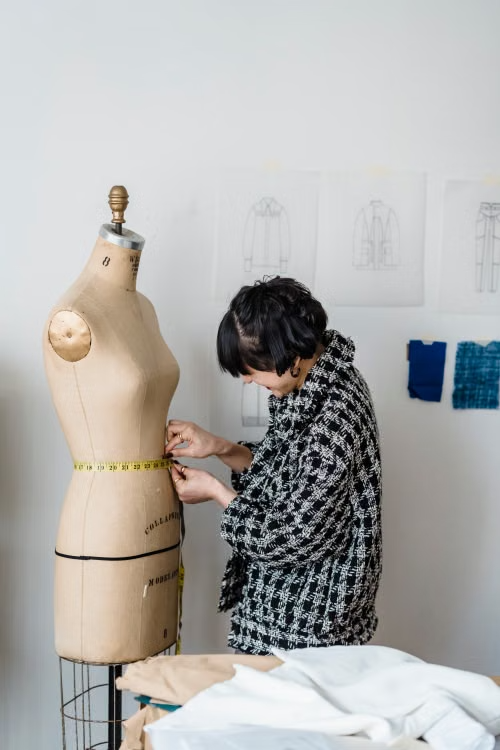
Look for a size chart that provides bust, waist, hip and garment length measurements. Just a line of S, M and L is not sufficient. The letter on a label may mean little as the sizing of the UK and US may differ.
Take a measurement of a well-fitting garment and compare the measurements with the chart. If it doesn’t mention it, inquire about the material, whether it’s lined, whether it is stretchy, and if it is see-through.
5. How they want to be paid
If someone asks you to pay in full to a personal UPI account, it’s a big red flag. It’s safer to take cash on delivery and safer to check out via the brand’s own website with a proper payment gateway. Never send money to someone who contacts you via Instagram claiming they are from a store when purchasing clothes online.
Visit the official profile or website and place an order via the provided route. Capture screenshots of the order conversation, seller details and payment confirmation.
6. Return, exchange and refund policy
Check the return policy before you pay. It can be in the bio, a highlight, pinned post and/or the store’s website. Ask if the store will take returns or exchanges, the number of days you have to return the item, who is responsible for shipping it back, and if sale items are final.
Some small stores will not accept returns. This may be their declared policy, but you should be aware of it before the parcel is received. Make a screen shot of the terms displayed at the time of ordering so that you can refer to them later in case they are changed.
7. Contact details and a GST number
Check for a telephone number, email address, business address or website. “DM to order” alone does not provide you with much recourse. In case the page/invoice contains a GSTIN, search free on gst.gov.in under Search Taxpayer and then Search by GSTIN/UIN.
The result provides the registered legal name and registration status. Match the name with the store. It is not enough to simply have a GSTIN as a tiny seller may not be registered.
If an order goes wrong
If the fake seller has taken your money, dial 1930 immediately to report financial cyber fraud and lodge a complaint at cybercrime.gov.in. In case of any fault in the product or refusal of the refund, please reach out to the National Consumer Helpline at 1915, 1800-11-4000, WhatsApp 8800001915 or consumerhelpline.gov.in.
Save the chat, screen shots, order information and proof of payment. They might assist in clarifying the circumstances.
Conclusion
If you have just a second, tap on ‘About this account’. It’s quick, free and may show you a page that has been around for only last month, but acts like a well-established boutique.
This feature isn’t going to tell you that someone is trustworthy. An account can be old and still not great. Likewise a new store can be completely real. However it does give you a good starting point so you know what you’re getting into before you pay up. It’s like looking at the front door.
If you get ‘DM for price’ for all your questions, then customer service won’t be great when things go wrong.

Swati Singh is a Culture & Lifestyle Writer with a Bachelor of Arts in English from the University of Delhi. She covers trending stories and fresh perspectives on fashion, beauty, wellness, relationships, cultural traditions, and modern living. With a passion for storytelling, she explores emerging lifestyle trends, seasonal celebrations, popular culture, and everyday topics that matter to readers. Her goal is to deliver engaging, informative, and relatable content that helps readers discover new ideas, stay updated on changing trends, and find inspiration in everyday life.