
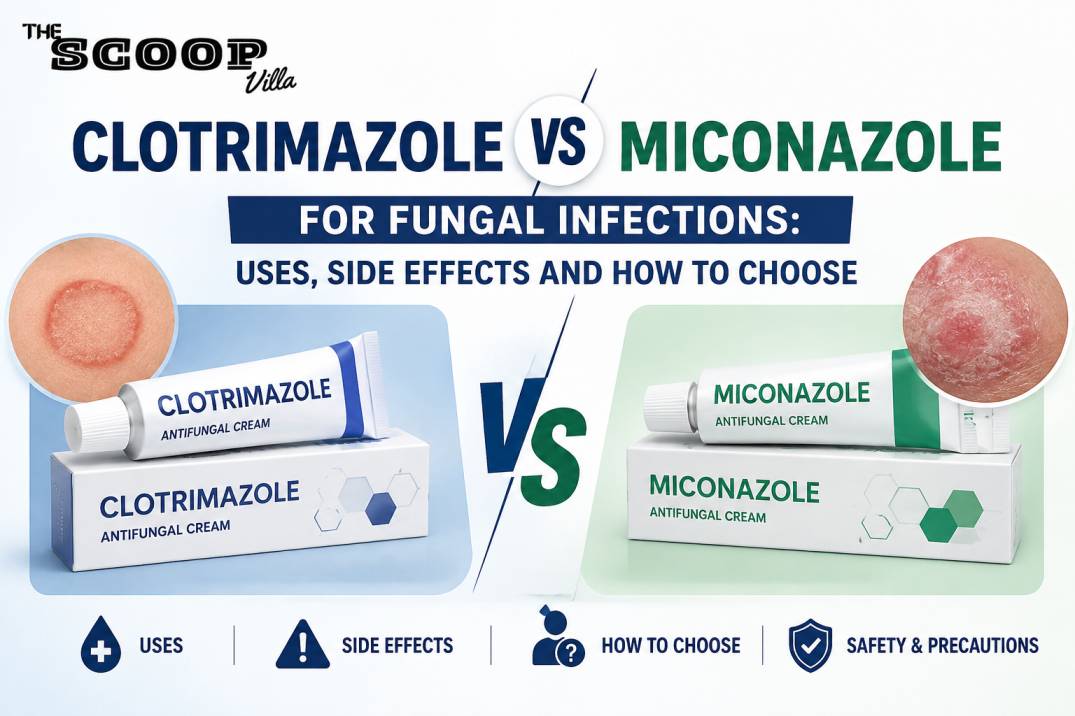
A fungal infection does not usually leave much room for guesswork. Once treatment is needed, however, the choice in Clotrimazole vs Miconazole can seem less straightforward. Both drugs are used against fungal infections and can work well, but they differ in their forms and in some of the situations in which they are used.
Understanding these points can help you decide which treatment makes sense for a particular infection.
Clotrimazole vs Miconazole: Key Differences Explained
Both miconazole and clotrimazole belong to a group of medicines known as azole antifungals. They are used for several familiar fungal infections, including jock itch, athlete’s foot, and some yeast infections.
Rather than simply easing the irritation, these medicines act on the fungus itself. They interfere with the fungal cell membrane, making it difficult for the organism to grow and survive. As the infection clears, symptoms such as itching, redness, and discomfort can subside.
There is a practical difference between the two medicines as well. Miconazole is sold in several preparations, including creams, powders, and sprays, so it can be applied in different ways. Clotrimazole is commonly supplied as a cream, although other formulations also exist.
Both can be obtained over the counter for many common uses. Neither is a universal remedy, however, and the right choice depends on the type and location of the infection, as well as how the medicine is intended to be used.
How Clotrimazole and Miconazole Fight Fungal Infections
The two medicines attack fungi in much the same way. They disrupt the cell membrane and make it harder for the fungus to grow. The drugs interfere with the production of ergosterol, a substance the fungus needs to maintain that membrane. Without enough ergosterol, the fungal cells become weaker and eventually die off. As this happens, the infection begins to clear.
The basic action of the drugs is therefore much alike. The more useful question is which preparation suits the person using it. Miconazole comes in forms such as creams, powders, and sprays. Clotrimazole also comes in several preparations, depending on the intended use.
A cream may be the sensible choice when the affected skin is easy to reach. A spray or powder may be more convenient when it is not. Skin tolerance can matter too, since one formulation may irritate a person who has no trouble with another.
Clotrimazole vs Miconazole: Which One Fits Your Infection?
When considering Clotrimazole vs Miconazole, the kind of infection should come first. Miconazole is commonly used against yeast infections and can be useful when the infection affects moist or sensitive areas of the body. Clotrimazole is widely used for infections caused by dermatophytes, including athlete’s foot.

Doctors and pharmacists may also recommend it for certain Candida infections. The choice is not always a matter of which drug is stronger. It is often a matter of matching the medicine to the infection and the way it needs to be treated.
Speed of recovery may also enter into the decision. The effect of an antifungal can vary with the infection and the part of the body affected. One treatment may work well in one case and less well in another. There is no need to guess, however. A doctor or other healthcare professional can help determine which medicine is likely to suit the infection and the person using it.
Miconazole and Clotrimazole Side Effects
Neither medicine causes trouble for most people, but neither is entirely free of risks. Miconazole and clotrimazole can sometimes irritate the skin. You may notice redness, mild burning, itching, or discomfort after applying them. These effects are usually minor and do not last long. A severe reaction is uncommon. If one occurs, stop and seek medical advice rather than continuing the treatment.
How you use an antifungal matters as much as which one you choose. Follow the directions on the product and do not apply more than recommended. Keep the affected area clean and use the medicine for as long as advised. If the treatment causes persistent irritation, or the infection does not improve, speak to a doctor or pharmacist. They can tell you whether you should continue, change the treatment, or have the infection examined.
Seeking Professional Advice for a Fungal Infection
You can buy both miconazole and clotrimazole without a prescription in many places. That does not mean professional advice is unnecessary. A mild infection may respond to an over-the-counter treatment, but a stubborn or severe one needs more care. A doctor can identify the infection and take other health factors into account before recommending a treatment.
Conclusion
Miconazole and clotrimazole are both azoles and target fungi by interfering with their growth. However, there are still details to be considered. Location of the infection is important. There are a number of options available with Miconazole, such as creams, powders and sprays. Another common drug is clotrimazole, which is used in a variety of infections, including athlete’s foot and some Candida infections.
Both drugs are not completely free of side-effects. An antifungal may cause irritation, redness or a burning sensation in some people. The problems tend to be mild. But if they do not go away, they should not be ignored. This is also true if the infection does not get better. Taking more of the medicine will not make it more effective. It could just make the skin more irritated. Follow the product directions instead.
When in doubt, or if you don’t know what you’re treating, consult a physician or pharmacist about the type of medicine to use. Just a little good advice can save a lot of wasted treatment.
FAQs
1. Are miconazole and clotrimazole the same medicine?
No, they’re not exactly same, but they are similar. The two drugs, miconazole and clotrimazole, are members of the azole class of antifungal drugs and act in essentially the same manner by disrupting the cell membrane of the fungus. They are effective against a number of common fungal infections, but may differ depending on the type of infection.
2. Which is better, miconazole or clotrimazole?
In the clotrimazole vs miconazole battle, there is no clear winner. The choice of which medicine is better depends on what type of infection it is and where it is located and how the medicine is to be applied.
3. What infections can miconazole treat?
Miconazole is a common medication used for a variety of fungal infections such as jock itch, athlete’s foot and some yeast infections. It comes in various types, such as creams, powders and sprays, making it easy to use in various situations.
4. What infections can clotrimazole treat?
Clotrimazole can be prescribed for fungal conditions like athlete’s foot and is recommended for some Candida infections. It is typically sold in a cream form, but there are other forms available. The selection should be made based on the infection being treated and not just the fact that one is thought to be more powerful than the other.
5. Do miconazole and clotrimazole have side effects?
Local skin irritation is an occasional side effect of both medicines. Side effects may be redness, slight burning, itching or discomfort following application. The reactions are usually minor and short-lived; severe reactions are rare. If it persists or a severe reaction occurs, it is better to get medical advice.
Note: This article is for general information. It is not a substitute for medical advice. Do not begin, stop, or alter a medicine because of what you read here. Medicines can affect people differently. If you plan to use a drug or treatment, speak to a qualified doctor or other healthcare professional first. They can advise you on what is safe and suitable for your particular case.



Adam Smith is a health and wellness content writer dedicated to delivering accurate, accessible, and informative health information. Their areas of coverage include nutrition, fitness, preventive health, mental well-being, lifestyle, common health concerns, and emerging wellness trends.